For aerospace applications where thermal stability and weight are critical, composite components must not only meet tight mechanical and thermal tolerances, they must also be reproducible at scale. Yet many advanced composite parts are still made as one-offs, with time-consuming manual labour at every step. This introduces risk, variability, and cost when scaling.
At New Frontier Technologies, we’ve developed a manufacturing workflow that combines automated fibre placement (AFP) with optional CT-based 3D diagnostics. This enables rapid iteration of geometry and processing parameters during the development of the first part, minimising uncertainty and locking in quality before serial production begins. When required, internal structures can be validated, giving customers added confidence in mission-critical parts (read more here: design iteration case study)
To showcase this capability, we additively manufactured a series of 6 conical composite tubes for ground-based precision instrumentation. Each tube tapers from 56 mm to 170 mm in diameter while simultaneously decreasing in wall thicknesses from 6 mm to 2 mm respectively.
The tubes were designed by the ANU to support the establishment of their lunar communication capability using high-power laser systems, supported by funding provided by the Australian Space Agency Moon to Mars Demonstrator Mission Grant program to facilitate operational capability for the Australian Deep Space Optical Ground Station Network. ANU and NFT worked together during the design process to enable the manufacture of components that meet the challenging requirements for this application.
Using this design, NFT was able to utilise digital design-for-manufacture tools to achieve a near-zero coefficient of thermal expansion (CTE) along the axial direction, while simultaneously tuning the tube to the CTE of aluminium in the radial direction. The first tube underwent several design-for-manufacture iterations. Tooling was custom designed and manufactured as part of this development cycle, which is required whether producing one part or many. Once the tooling was in place and the design-for-manufacture finalised, the manufacture of each subsequent tubes was as quick as 2 hours, demonstrating a true “click-and-repeat” workflow.
Key Benefits:
- Design Once, Produce Many: Once validated, parts can be reproduced reliably
- Optional CT-Guided Confidence: Internal structure can be validated and process optimised with 3D diagnostics.
- Mini-Serial Production Ready: Automated fibre placement and digital manufacturing data enable efficient small-batch production of complex composite parts.
- Thermally Stable Tapered Geometry: Axial low-CTE laminate ensures performance in temperature-sensitive environments.
- Material Control: Advanced manufacturing methods allow for control of component properties that are not possible and/or quite costly with traditional manufacturing
Find Out More
To learn how our mini-serial manufacturing capability can support your space or aerospace mission, contact us.
Similar Case Studies
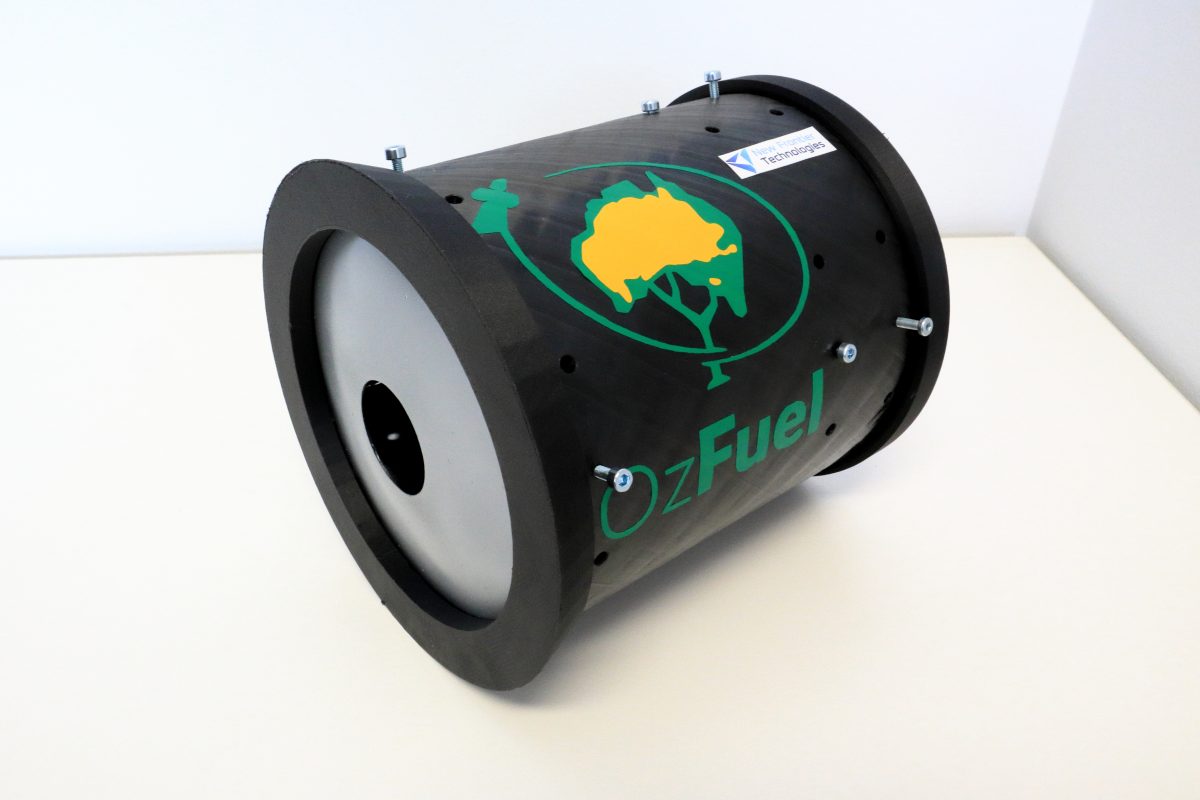
Dimensionally stable composite mount for optical satellite-based instrumentation
This near-zero axial coefficient of thermal expansion demonstrator ensures precise performance across extreme orbital temperature shifts - without the need for lens refocusing.
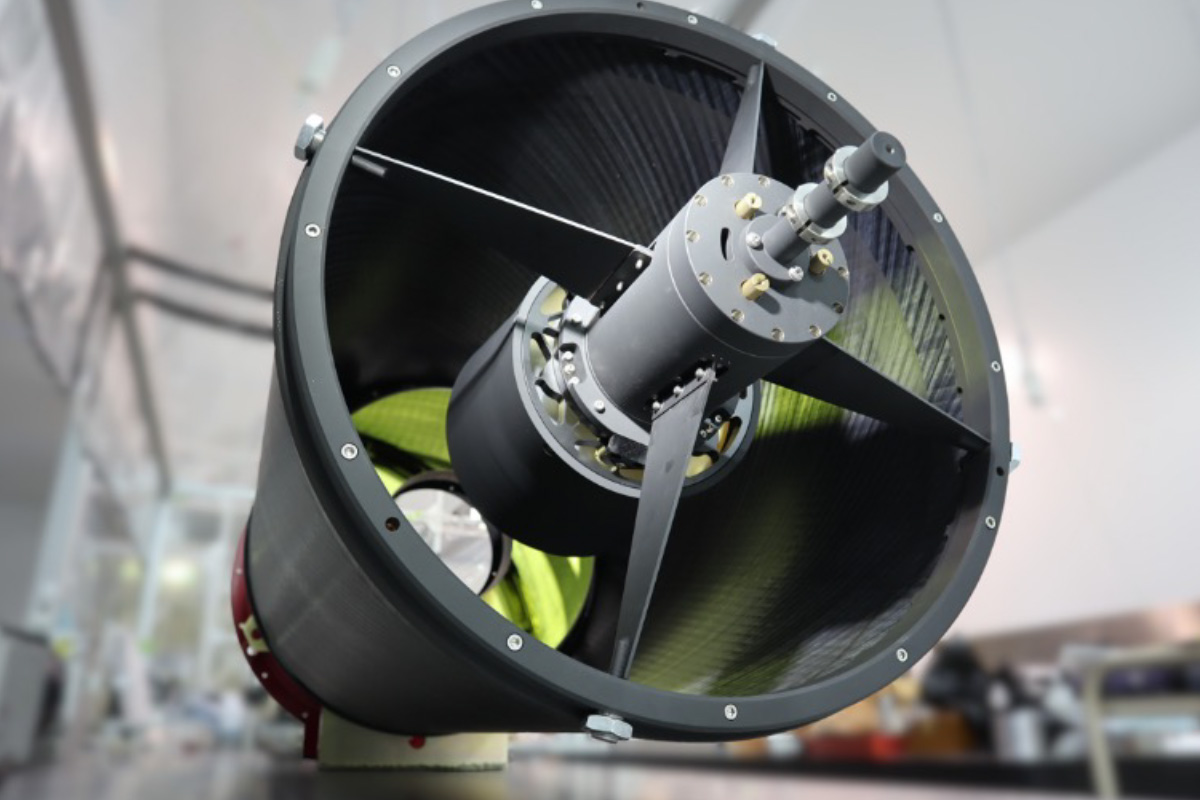
Lightweight, low-CTE mirror mounts for ground-based DREAMS telescope
Designed for biaxial thermal and structural precision, this lightweight composite mirror mount was produced in under 9 hours and maintains lens alignment and focus during overnight observations.

Iterating Design-for-Manufacture with 3D Diagnostics
This composite satellite strut was developed through our iterative design process combining AFP manufacturing and CT-based 3D diagnostics, enabling rapid optimisation of void content and mechanical properties.